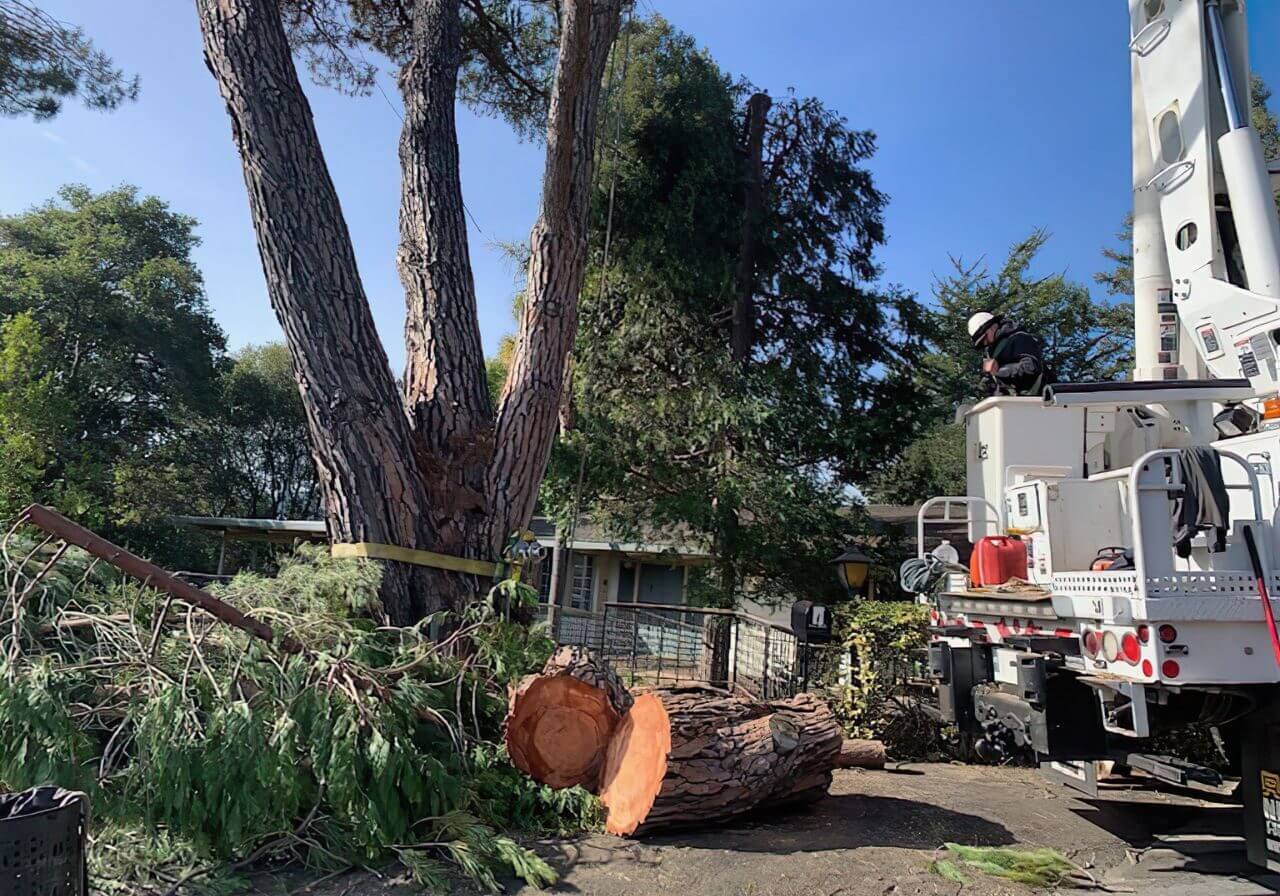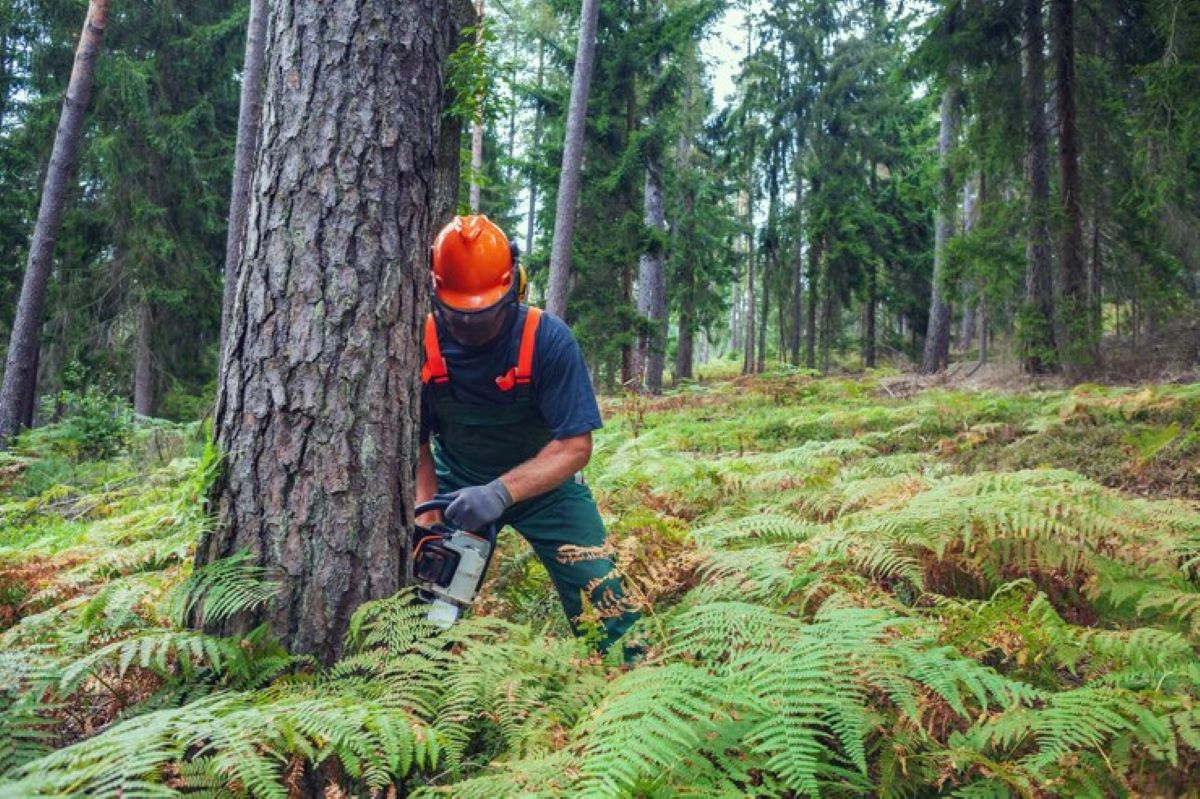

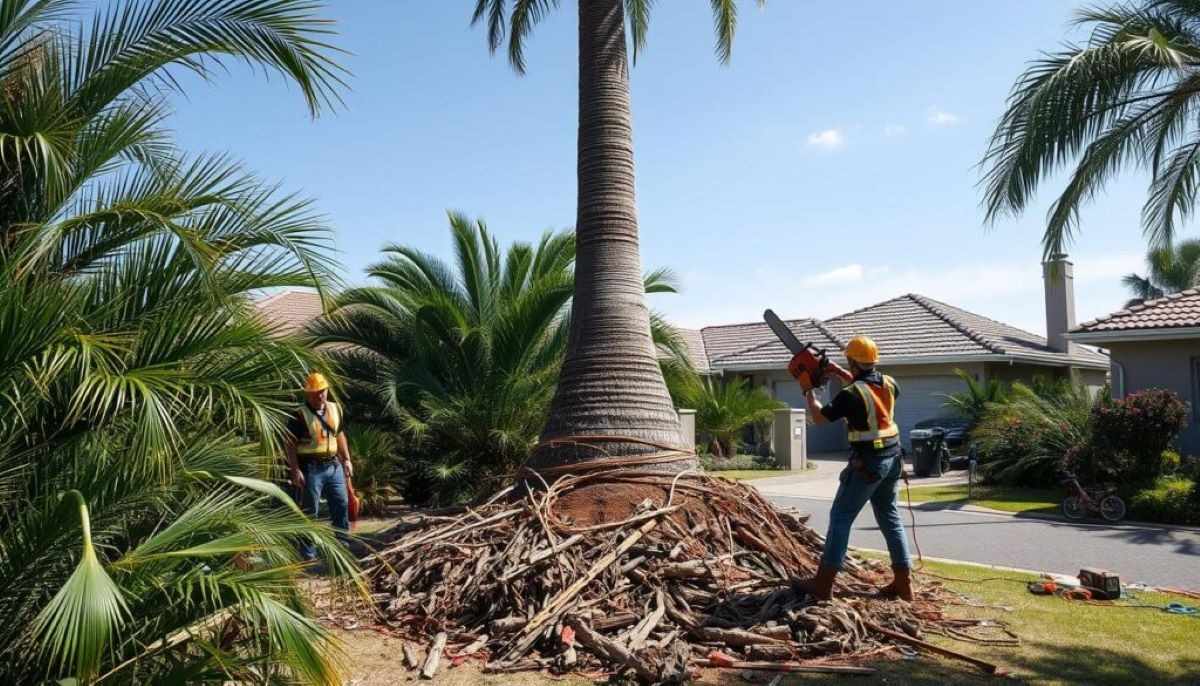
The reason is not just their height. It is how palms are built, where they are usually planted, and what happens when heavy, awkward sections are lowered near homes, pools, fences, and powerlines.
Why are palm trees structurally different from “normal” trees?
Palms are not “woody” trees in the same way eucalypts or bottlebrush are, which is why palm tree removal requires a different approach. Their trunks are fibrous, layered, and dense, affecting cutting speed, tool choice, and how sections behave when rigged.
They also do not branch in the same predictable way. With most species, there is a single crown at the top, so there are fewer natural tie-in points and fewer places to reduce weight gradually without careful staging.
Why does the crown make palm removal riskier?
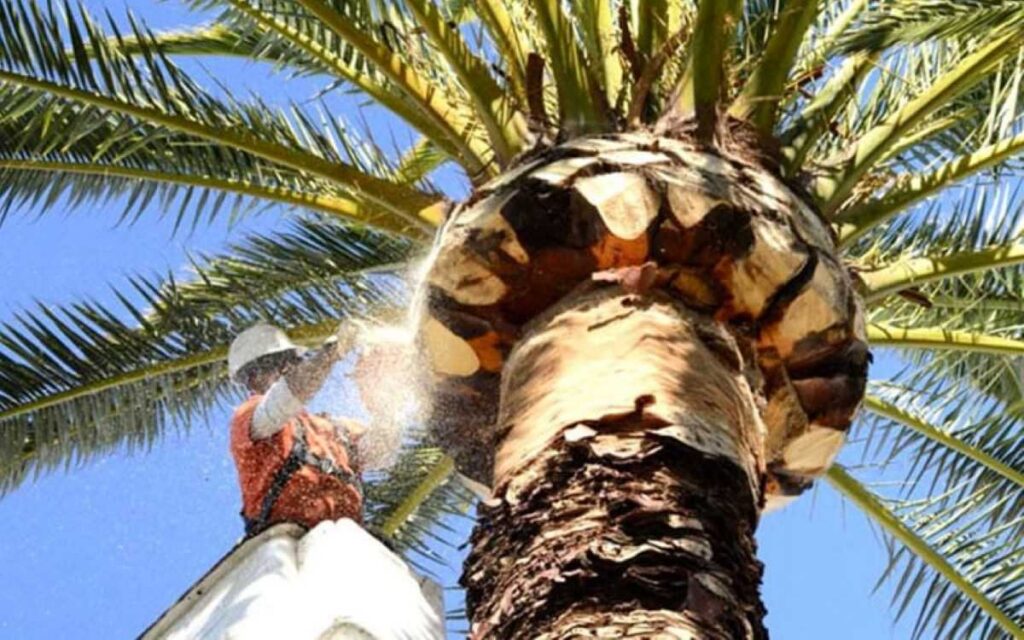
Most of a palm’s bulk is concentrated in the crown, where fronds, seed pods, and sometimes heavy “boots” sit high above the ground. That top-heavy load can shift suddenly once cuts begin.
In Sydney yards, crowns often overhang roofs, gardens, pergolas, or neighbouring property. That means crews typically need controlled lowering, exclusion zones, and a clear plan for how each piece will come down.
Why do palms create more mess and disposal challenges?
Palms produce waste that is awkward to handle. Fronds are long and springy, trunks can be heavy and fibrous, and seed clusters can be sticky or spiky depending on species.
Chipping is not always as straightforward as with standard green waste. Disposal can also be pricier because loads are bulky, and palm material can fill a truck quickly even when it is not especially thick.
Why can palm stumps be harder to remove?
Palm stumps behave differently underground. Some species have tight, fibrous root mats that can be stubborn to grind, and palms often sit in landscaped pockets with edging, irrigation, or pool plumbing nearby.
Where stump grinding is not suitable, they may need excavation, which increases time, access needs, and the chance of collateral damage to surrounding hardscape or garden structures.
Why does access matter more with palms in Sydney properties?
Many palms are planted as feature trees in tight spaces. They are commonly found near pools, retaining walls, courtyards, narrow side paths, and townhouse boundaries where machinery access is limited.
When access is poor, they may need sectional dismantling by climbers or elevated work platforms, plus manual handling to move heavy sections out without damaging paving, lawns, or garden beds.
Why do palms often require more rigging and controlled lowering?
Because palms have fewer lateral limbs, there are fewer options to “take small bits” in a natural progression. They are often dismantled in larger, heavier sections of trunk once the crown is removed.
If the drop zone is restricted, sections typically need to be roped down. That adds labour and demands skill, because fibrous trunks can behave differently under friction and compression than typical hardwood logs. You may like to visit https://savourtree.com/tree-pruning-near-me-choosing-the-right-local-arborist/ to learn more about tree pruning near me: choosing the right local Arborist.
Why can palm removal be more complex near powerlines and neighbours?
Palms are often tall, straight, and planted along fences or driveways, which puts them close to boundaries and overhead services. In those locations, there is less room to swing or drop pieces safely.
They also tend to be highly visible, so complaints and disputes can escalate quickly if debris, noise, or accidental damage occurs. Professional operators usually plan for protection, communication, and clean containment from the start.
Why do some palm species add extra hazards?
Some palms carry built-in hazards that change the approach. Sharp spines, heavy seed heads, and persistent “boots” can cut skin, snag ropes, or fall unpredictably.
There is also the pest angle. In some cases, nesting animals or bee activity can be present in crowns. A careful pre-check matters, especially before climbing or cutting into the crown mass.
Why is DIY palm removal a poor idea?
Palm removal looks like “just cut it down” until they are standing under it with a chainsaw. The risks are height, top-weight, limited tie-in points, and the difficulty of controlling where heavy sections land.
Even if they can cut safely, they still have to dispose of bulky waste and deal with the stump. For most Sydney properties, that combination makes DIY a false economy. Read more about waste and recycling.
What should they ask a Sydney palm removal team before booking?
They should ask how the crew will access the palm, whether they will climb or use an elevated platform, and how they will protect nearby structures. They should also confirm what is included: removal, clean-up, waste disposal, and stump grinding or stump treatment.
They should request a clear plan for traffic, neighbours, and working near services, plus proof of insurance. If a quote is vague on disposal or stump work, the final cost often is not.
FAQs (Frequently Asked Questions)
Why are palm trees structurally different from typical backyard trees?
Palm trees differ structurally because their trunks are fibrous, layered, and dense rather than woody like eucalypts or bottlebrush. They have a single crown at the top without predictable branching, which affects cutting speed, tool choice, and rigging methods during removal.
What makes removing palm tree crowns riskier compared to other trees?
Most of a palm’s bulk is concentrated in its crown, which includes fronds, seed pods, and heavy ‘boots’ high above ground. This top-heavy load can shift suddenly during cutting. In Sydney yards, crowns often overhang roofs or gardens, requiring controlled lowering, exclusion zones, and precise planning to safely remove them.
Why do palm trees create more mess and disposal challenges after removal?
Palm waste is awkward to handle due to long, springy fronds; heavy, fibrous trunks; and sticky or spiky seed clusters depending on species. Chipping palm material is less straightforward than standard green waste. Additionally, bulky loads fill trucks quickly, making disposal more costly.
How does limited access on Sydney properties impact palm tree removal?
Palms are often planted in tight spaces near pools, retaining walls, narrow paths, or townhouse boundaries where machinery access is restricted. Poor access necessitates sectional dismantling by climbers or elevated platforms and manual handling of heavy sections to avoid damage to paving or gardens.
Why do palms require more rigging and controlled lowering during removal?
With fewer lateral limbs for natural tie-in points, palms must be dismantled in larger, heavier trunk sections once the crown is removed. In restricted drop zones, these sections need to be roped down carefully as fibrous trunks behave differently under friction and compression compared to typical hardwood logs.
What precautions should homeowners take before hiring a Sydney palm removal team?
Homeowners should ask about crew access methods (climbing vs elevated platforms), protection of nearby structures, inclusion of removal services like clean-up and stump grinding, plans for managing traffic and neighbours, working near powerlines or services, and proof of insurance. Vague quotes on disposal or stump work may lead to unexpected costs.